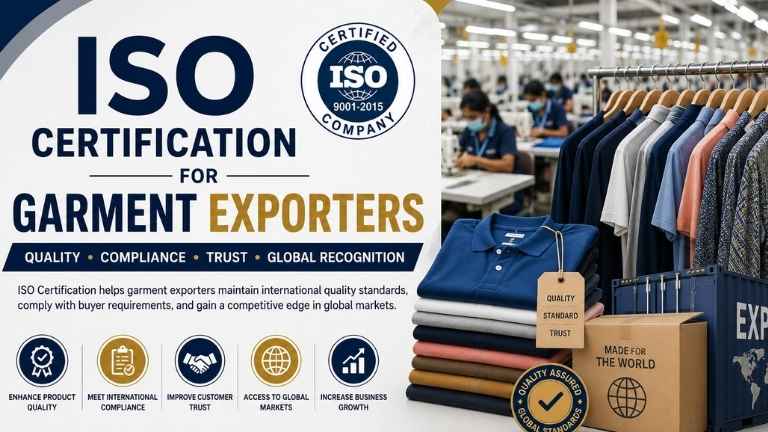
ISO
Certification Process for Garment Exporters
Step 1: Initial Consultation and Gap Analysis
The initial
action is to assess the current procedures of your company and align them with
the chosen ISO standard's criteria. Conducting a gap analysis will pinpoint
what needs improvement, which can include quality management practices,
documentation processes, operational controls, or regulatory compliance
practices. The assessment creates the path toward a successful implementation
of ISO.
Step
2: Documentation Preparation
After spotting
the gaps, the documentation necessary is created. The paperwork necessary
includes quality manuals, SOPs, work guidelines and instructions, quality
policies, risk assessment reports, process flow charts, and other documents
required by the ISO standards chosen for the business. The documentation done
properly makes sure that the processes are standardized and followed in the
same way everywhere within the company.
Step
3: Implementation of the ISO Management System
After the
finishing of documentation process, the ISO management system is activated in
all necessary departments to let employees use the documents during their
everyday activities guaranteeing the consistency in terms of production,
quality control, inventory management, procurement and customer service.
Implementation is also monitored by management to comply with ISO requirements.
Step
4: Employee Training and Awareness
Partaking of
employees plays an important role in the effective implementation of ISO.
Employees receive training concerning ISO standards, company processes,
company's policies, quality targets, and each individual's role in
implementation. The continuous awareness program helps employees understand the
importance of quality compliance and the necessity for continuous improvement.
Step
5: Internal Audit
Before applying
for external certification, the company checks if the ISO system has been
successfully implemented through internal auditing. The auditors examine the
documentation, check the activities performed, find any nonconformities, and
suggest corrective actions. This procedure ensures that the company is well
prepared for the certification audit.
Step
6: Management Review Meeting
Senior management
reviews the results of the internal audit, evaluates the overall performance of
the management system, and ensures that all identified issues have been
addressed. The management review also focuses on quality objectives, customer
feedback, operational performance, and opportunities for continual improvement
before proceeding with the certification audit.
Step
7: Certification Audit by an Accredited Certification Body
Phase 1
Assessment:
The auditors look
into the documentation, policies, procedures, and preparedness of the
organization regarding certification. All findings and discrepancies found in
this stage should be dealt with before proceeding with the other phase.
Phase 2
Assessment:
Auditors carry
out on-site examinations to authenticate that the management system described
in the documents is actually put into daily practices. They evaluate production
processes and how the employees and quality controls operate and record them,
as well as how they comply with the demands by ISO.
Step
8: Issue Resolution and Corrective Actions
Should the
auditors encounter non-conformities during the audit, the organization should
carry out corrective actions within the time specified. After the certification
body confirms the resolution of the non-conformities, the process will reach
its final stage.
Step
9: ISO Certificate Issuance
The ISO
Certificate is issued by the certifying body after the successful completion of
the audit and completion of all ISO requirements. The certificate indicates
that the garment exporter is adhering to internationally accepted management
standards and can confidently showcase its certification to its customers,
suppliers, and worldwide buyers.
Step
10: Surveillance Audits and Continuous Improvement
Receiving ISO
certification is an ongoing process and not a one-time accomplishment.
Certified organizations have to go through periodic surveillance audits, which
usually happen every year, for them to be sure that they are still compliant
with ISO standards. Furthermore, organizations are expected to improve their
management systems on an ongoing basis, and monitor their performance, address
any risks, and keep records updated. Generally, most ISO certificates are valid
for three years provided that the organization carries out its surveillance
audits successfully.
Cost of ISO Certification for
Garment Exporters
The cost of
certification is influenced by several factors, such as:
- Size of the company
- Number of workers
- Number of plants
- Extent of certification
- ISO standard chosen
- Relevant certification body
- Complexity of the documentation
Getting quotes
from recognized certification authorities will enable fair pricing practices.
Common
Challenges Faced During ISO Implementation
Any organization
faces problems like:
- Absence of appropriate documentation
- Resistance from employees
- Non-standardization of procedures
- Limited involvement of management
- Inadequate training
- Ineffective internal audit process
However, it is
possible to overcome these challenges given the right combination of proper
organization, leadership commitment and involvement of employees.
Tips
for Successful ISO Certification
- Engage senior management from the outset.
- Provide frequent training to staff.
- Ensure correct record-keeping.
- Carry out constant auditing of the organization.
- Supervise the compliance with quality targets.
- Promote ongoing improvement of processes.
- Make a quick response to any deviations from the requirements.
- Collaborate with trusted ISO advisors.
How
ISO Certification Improves Export Performance
Garment exporters
ensuring ISO certification often achieve measurable results such as:
- Rising inquiries from buyers
- Growing export order quantity
- Loyal customers
- Reduced number of product returns
- Better delivery services
- Improved supplier relations
- Enhanced transparency in operations
- Participation in international trade exhibitions and procurement invites
Conclusion
Quality,
consistency, sustainability, and compliance are all important factors that are
key for success in the world’s apparel industry. With the help of ISO
certification, clothing exporters can enhance their operations, enhance product
quality, minimize operational risk, and build a lasting relationship with their
international customers.
Regardless of
whether you are exporting finished garments, clothing, overalls, knitted
products, or fabric, the implementation of ISO standards plays an important
role in demonstrating your commitment to quality and improvement. The
certification also establishes a solid foundation for sustainable development,
operational efficiency, and international competitiveness.
FAQ
Which
ISO certification is most suitable for garment exporters?
ISO 9001:2015 is
the most highly suggested certification for garment export business. There are
also other ISO certifications available depending on the requirements of the
businesses like ISO 14001, ISO 45001, ISO 27001 and ISO 50001.
According
to the law, is it necessary for garment exporters to have an ISO certification?
Generally, ISO
certification is not required by law for export garment business. However, many
international buyers prefer either to work with ISO-certified suppliers.
Is
ISO certification valid for a specified period?
Most ISO
certifications are valid for a period of three for three years.
Can
small exporters avail ISO certification?
Yes. Small and
medium-sized exporters can apply ISO standards and gain the benefits of
improved quality, functionality, and reputation in the market.
Are
export activities enhanced by ISO certification?
Indeed. ISO
certification builds up confidence among buyers thereby fulfilling the legal
requirements of the business organizations and further increases possibilities
to win contracts globally.
ALSO READ