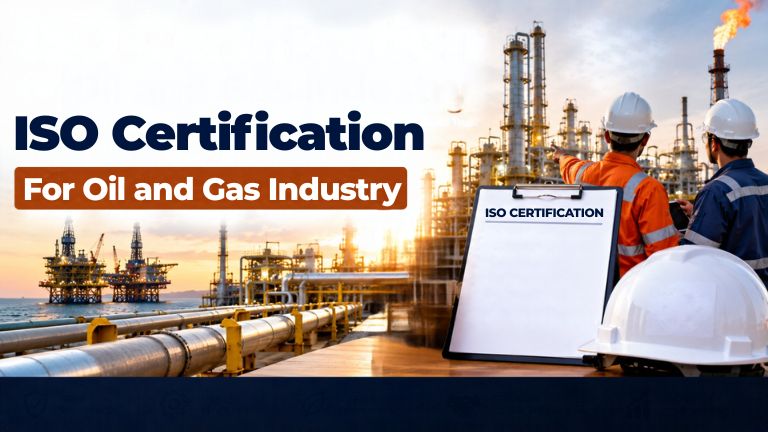
The oil and gas industry operates in one of the most complex, high-stakes environments in the world. The risks involved, whether environmental, operational, financial, or human, are enormous. A single failure in a pipeline, a refinery, or an offshore platform can cost lives, devastate ecosystems, and trigger regulatory consequences that take years to resolve. In an industry where the margin for error is this thin, having internationally recognized standards in place isn't just good practice. It's a fundamental requirement for operating responsibly and competitively.
This is exactly why ISO certification for the oil and gas industry has become a critical baseline for companies across the entire value chain, from upstream exploration and production to midstream transportation and downstream refining and retail. Whether you're a major operator, an equipment manufacturer, or a service provider supplying the sector, ISO certification signals to clients, regulators, and partners that your systems, processes, and practices meet the standards the industry demands.
This article covers the most important ISO standards relevant to the oil and gas sector, what each one covers, why they matter, and how companies in this industry approach the certification process.
Why ISO Certification Matters Specifically in Oil and Gas
Most industries benefit from ISO certification. The oil and gas sector depends on it in ways that go beyond typical business benefits.
Regulatory requirements in most oil and gas producing nations either mandate or strongly favor ISO-certified suppliers and operators. International procurement processes, particularly for large operators and national oil companies, routinely require suppliers to hold specific ISO certifications before they can be considered for contracts.
The industry also operates across multiple jurisdictions, often in politically complex and geographically remote environments. Having ISO certification provides a universally understood baseline of operational competence that crosses national boundaries and regulatory frameworks. A supplier certified to ISO 9001 in Nigeria operates to the same quality management standard as one certified in Norway, which is why ISO certification for the oil and gas industry has become the common language of operational credibility globally.
Beyond compliance and procurement, ISO certification in this sector directly supports risk management. The standards themselves are designed to identify, assess, and control the kinds of risks that in oil and gas can escalate from operational inconvenience to catastrophic incident.
Key ISO Standards for the Oil and Gas Industry
ISO 9001: Quality Management Systems
ISO 9001 is the foundation of any quality management framework and the most universally required certification across all sectors of the oil and gas industry. It establishes requirements for a quality management system that ensures consistent delivery of products and services that meet customer and regulatory requirements.
For oil and gas companies, ISO 9001 certification demonstrates that quality is managed systematically at every stage of operations, from procurement and engineering through to production, maintenance, and delivery. It's typically the first certification a company pursuing ISO certification for the oil and gas industry will obtain, and it forms the backbone onto which sector-specific standards are built.
ISO 14001: Environmental Management Systems
The environmental stakes in oil and gas operations are among the highest of any industry. Spills, emissions, and waste disposal failures can cause irreversible damage to ecosystems and communities and attract regulatory penalties, legal liability, and severe reputational consequences.
ISO 14001 provides a framework for managing environmental impacts systematically and demonstrating that commitment to regulators, communities, and international partners. For oil and gas companies operating in environmentally sensitive areas, holding ISO 14001 certification is often a licensing requirement and always a reputational necessity.
The standard requires companies to identify their significant environmental aspects, set measurable environmental objectives, implement controls and monitoring systems, and continually improve their environmental performance. ISO certification for the oil and gas industry in the environmental space has become particularly important as ESG reporting requirements tighten globally.
ISO 45001: Occupational Health and Safety Management Systems
Oil and gas is consistently ranked among the most dangerous industries in the world. Workers in upstream operations, refineries, and pipeline maintenance face hazards including high-pressure systems, flammable and toxic substances, extreme temperatures, remote locations, and heavy equipment.
ISO 45001 replaced the previous OHSAS 18001 standard and provides a comprehensive framework for managing occupational health and safety risks. It requires companies to take a proactive, risk-based approach to worker safety rather than simply reacting to incidents after they occur.
For oil and gas companies, ISO 45001 certification is increasingly required by major operators as a condition of supplier approval. It demonstrates that a company has systematic processes for identifying hazards, assessing risks, implementing controls, and continuously improving safety performance. In an industry where a single safety failure can kill workers and shut down operations, this certification carries serious weight.
ISO 29001: Quality Management for Petroleum, Petrochemical and Natural Gas Industries
This is the sector-specific quality management standard developed for the oil and gas industry and is one of the most important ISO certifications unique to this sector. ISO 29001 builds on the foundation of ISO 9001 but adds specific requirements relevant to petroleum, petrochemical, and natural gas organizations.
It was developed in collaboration with industry bodies including the American Petroleum Institute (API) and is widely recognized by major oil and gas operators and national oil companies as the preferred quality management certification for sector participants.
ISO 29001 certification for the oil and gas industry is particularly valued because it demonstrates that a company's quality management system has been designed with the specific risks, terminology, and requirements of the sector in mind, rather than applying a generic quality framework to a specialized environment.
ISO 50001: Energy Management Systems
With the global energy transition accelerating and pressure on oil and gas companies to demonstrate responsible energy use intensifying, ISO 50001 has become increasingly relevant. This standard provides a framework for managing energy consumption systematically, improving energy efficiency, and reducing energy-related costs and emissions.
For oil and gas companies with significant energy consumption in operations such as gas compression, refining, and offshore production, ISO 50001 supports both operational cost reduction and the ability to report credibly on energy performance to regulators, investors, and partners.
ISO 55001: Asset Management
The oil and gas industry is defined by its assets: wells, pipelines, platforms, refineries, storage facilities, and processing plants. Managing these assets effectively over their entire lifecycle, maximizing performance while controlling risk and cost, is one of the most complex challenges in the industry.
ISO 55001 provides a framework for systematic asset management that covers the entire asset lifecycle from planning and acquisition through operation, maintenance, and eventual decommissioning. ISO certification for the oil and gas industry in asset management is particularly valued by operators managing aging infrastructure where the consequences of asset failure are severe. How Oil and Gas Companies Approach ISO Certification
The certification process for oil and gas companies follows the same general pathway as other industries but with additional complexity driven by the scale and nature of operations.
Initial gap analysis: The starting point is always an honest assessment of where existing systems and processes stand against the requirements of the target standard. In oil and gas, this typically involves reviewing quality plans, safety management systems, environmental management procedures, and technical documentation across multiple operational sites and functions.
System development and documentation: Based on the gap analysis, the company develops or updates its management system documentation. In the oil and gas sector, this often involves integrating multiple standards into an Integrated Management System (IMS) that addresses quality, health and safety, and environmental requirements simultaneously rather than maintaining separate systems for each standard.
Staff training and awareness: ISO certification for the oil and gas industry requires that all relevant personnel understand their roles within the management system. In large operations with workforces spread across remote sites, this training challenge is significant and needs to be addressed systematically.
Internal audit: Before inviting an external certification body, a thorough internal audit verifies that the management system is working as designed and identifies any remaining gaps. In high-risk environments like oil and gas, internal audits carry particular importance because the consequences of an unidentified gap can be severe.
External certification audit: The certification body conducts a two-stage audit, reviewing documentation in stage one and assessing implementation in the field in stage two. Oil and gas audits often involve site visits to operational facilities, which requires careful coordination and compliance with site safety requirements.
Ongoing surveillance and recertification: Certification is maintained through annual surveillance audits and full recertification every three years. For oil and gas companies, this ongoing process supports continual improvement and ensures that management systems keep pace with changing operational conditions, regulatory requirements, and industry best practices.
The Business Case for ISO Certification in Oil and Gas
The investment required for ISO certification for the oil and gas industry is real, but so is the return. Companies that hold the right certifications gain access to international procurement opportunities that would otherwise be closed to them, reduce their operational risk exposure, demonstrate credibility to investors and insurers, and build a culture of systematic improvement that compounds in value over time.
As the industry navigates the pressures of the energy transition, decarbonization commitments, and heightened regulatory scrutiny, having robust, internationally recognized management systems in place is not a luxury. It's a competitive requirement and a mark of the operational discipline that the world's most demanding clients and regulators expect.
Final Thoughts
ISO certification for the oil and gas industry covers a broad and interconnected set of standards, each addressing a specific dimension of the complex risk and operational landscape this sector navigates daily. Getting the right certifications in place, implementing them with genuine commitment rather than as a paper exercise, and maintaining them rigorously over time is one of the most valuable investments an oil and gas company can make in its own long-term viability and reputation.
ALSO READ-